How AI Chatbots Can Help Grow Your Sales
20 Oct, 2026 / 3DEVs IT LTD
Category: AI
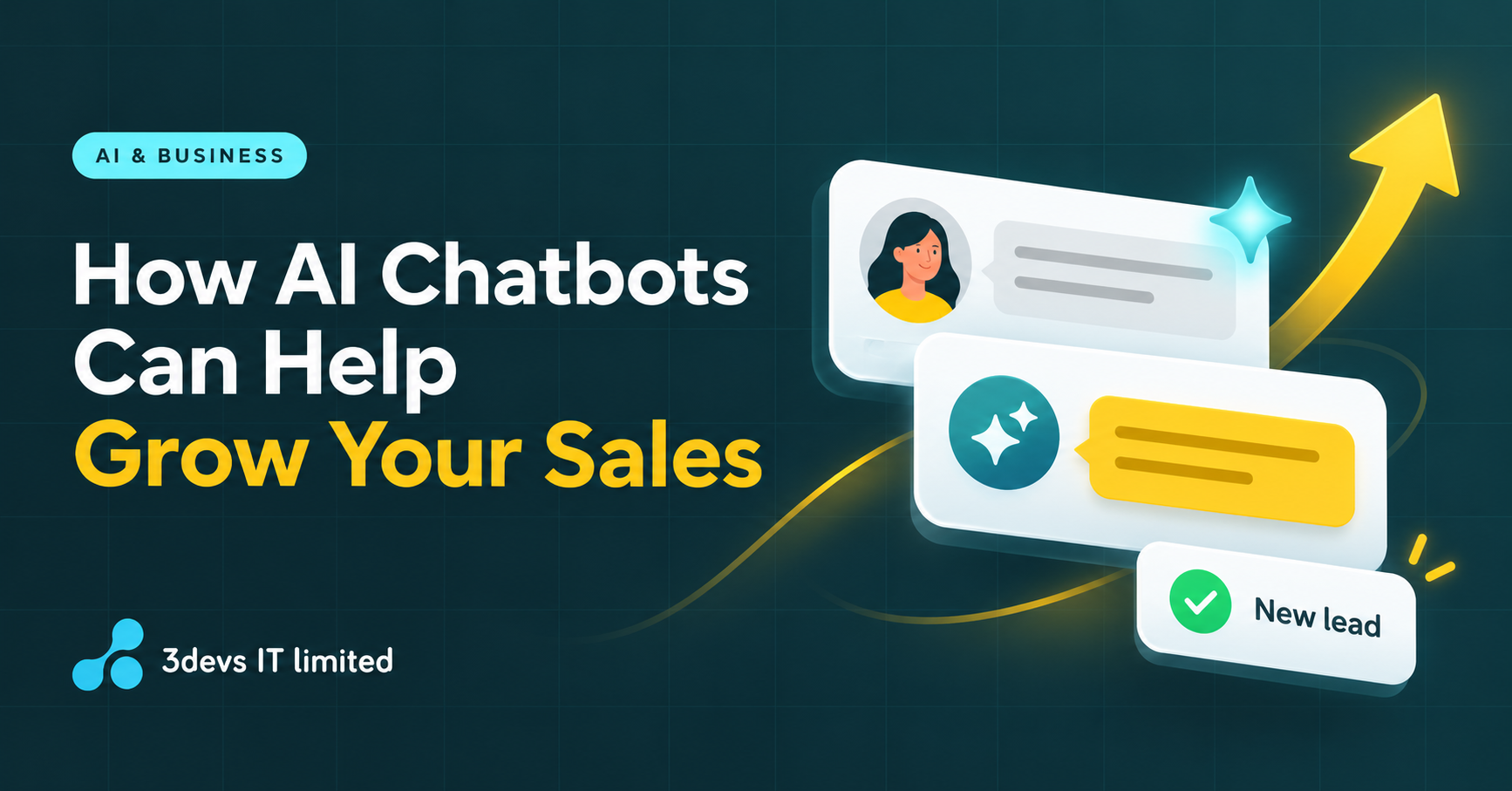
You spend time and money bringing people to your website. But what happens when someone arrives, has a question and cannot find an answer?
Some visitors will send an enquiry. Others will simply leave.
An AI chatbot gives customers another way to get help while they are interested. It can answer questions, help them explore your products or services and connect them with your sales team.
For businesses, that means fewer missed conversations and more opportunities to turn interest into a sale. Here are seven ways an AI chatbot can support that process.
1. Answer Customer Questions After Business Hours
Your office may close at 6 PM, but your customers can browse at any time.
Someone might be comparing products late at night or researching a service during the weekend. A chatbot can answer common questions using the business information you provide, without making the visitor wait until the next working day.
If the enquiry needs a person, the chatbot can collect the details for your team to follow up.
The benefit is straightforward: customers can take the next step while their interest is still fresh.
2. Make It Easier to Choose
A large product catalogue or a long list of services can leave visitors unsure where to start.
A conversational assistant can help narrow the options. Instead of asking customers to search through several pages, it can ask a few useful questions:
- What do you need the product or service for?
- Which features matter most?
- Do you have a budget in mind?
For example, a furniture retailer could help someone find a desk that fits their room and budget. A service provider could guide a visitor toward a consultation that matches their requirements.
This works best when the chatbot has accurate product information and clear rules for making suggestions.
3. Turn Enquiries into Useful Sales Leads
“Please contact me” gives your sales team very little information.
A chatbot can collect more context naturally during a conversation. It might ask what the customer needs, which challenges they want to solve and when they expect to make a decision.
With a CRM integration, those details can go directly to the right salesperson.
Your team can then begin with a relevant discussion instead of asking the customer to explain everything again. That makes follow-up more useful for both sides.
4. Clear Up Doubts Before a Purchase
Sometimes a customer is ready to buy but needs one final answer.
Do you deliver to their location? Is installation included? What happens if they need support?
A chatbot can explain your approved delivery, payment, warranty and service policies. When connected to the relevant systems, it can also check information such as stock availability or order status.
The distinction matters: live information requires a reliable integration. The chatbot should never guess whether an item is available or promise a delivery date it cannot confirm.
5. Suggest Extras That Actually Help
A useful recommendation can improve the purchase experience and create an additional sales opportunity.
Someone buying a printer may need compatible ink. A business purchasing software may also need data migration or staff training.
A chatbot can introduce these options when they are relevant and explain why they might be useful. Accurate catalogue information and compatibility rules help keep those suggestions appropriate.
The aim is to help customers complete their purchase with what they need. Too many prompts can make the conversation feel pushy.
6. Let Your Sales Team Focus on Detailed Conversations
Your salespeople bring the most value when they understand customer needs, explain options and build relationships.
Answering the same basic questions throughout the day leaves less time for that work.
An AI chatbot can handle routine enquiries and pass more detailed conversations to your team. Customers should also be able to ask for a person whenever they need one.
A good handover includes the relevant conversation history, so the customer does not have to start again.
7. Show You What Your Website Is Missing
Customer questions can tell you a lot about your website.
If visitors repeatedly ask whether a service includes training, perhaps the service page needs a clearer explanation. If they struggle to compare two products, a comparison table may help.
Reviewing conversations can highlight these gaps. You can then improve your FAQs, product pages and sales materials, while handling customer information according to your privacy policies.
Over time, those improvements can make the buying process easier for everyone.
How to Make an AI Chatbot Work for Your Business
Start with a specific goal. You might want to capture after-hours enquiries, answer product questions or collect consultation requests.
Give the chatbot accurate information and set clear boundaries. It should know when to ask another question, when to retrieve information from a connected system and when to involve your team.
Before launch, test it with real customer questions—including unclear requests and questions it cannot answer.
Then measure what matters: qualified leads, completed bookings, sales conversions and customer feedback. A busy chatbot is only useful if its conversations help customers and support your business.
Build Better Customer Conversations With 3DEVs
At 3DEVs IT Ltd., we help businesses plan and develop AI chatbot solutions around their customers and workflows. Depending on your requirements, this can include website chat, lead collection, CRM integration and access to relevant business information.
If your team is missing enquiries or spending too much time answering routine questions, a chatbot could be a practical place to start.